
‘Proud to represent the US, but free to speak’: Olympian Chloe Kim backs teammate after Trump’s ‘real loser’ remark over policy criticism
Simran Guleria | Feb 10, 2026, 06:29 IST
Chloe Kim has backed her Olympic teammate following Donald Trump’s ‘real loser’ comment, offering a measured take on national pride, free expression and athletes using their voices.

Image credit : X| @RpsAgainstTrump| Olympian Chloe Kim defends teammate amid Trump controversy
The political spotlight rarely spares elite athletes, but when it does fall, it often reveals how sport, identity and free expression collide. U.S. Olympic snowboarder Chloe Kim found herself at the centre of such a moment after stepping forward to support a fellow Olympian criticised by Donald Trump for speaking out against government policies.
![X| Chloe Kim speaks out after Trump’s ‘real loser’ remark]()
The US president had labelled Kim’s teammate “a real loser” following comments that questioned aspects of the administration’s approach. The remark sparked swift reaction online, drawing attention not only to the tone of the criticism but also to the wider issue of whether athletes should be expected to remain silent on political matters. Kim’s response, delivered calmly and without confrontation, added a measured yet powerful voice to the debate.
Rather than responding directly to Trump, Kim chose to underline her pride in representing the United States while defending the right to speak freely. As the daughter of parents who emigrated from South Korea, she framed her message through lived experience, highlighting how opportunity and dissent can coexist within the same national story.
![X| Donald Trump in a previously taken photograph.]()
Kim’s statement struck a careful balance. She acknowledged the opportunities the United States had given her family, crediting the country for allowing her to pursue excellence at the highest level of sport. At the same time, she rejected the idea that gratitude should come at the cost of personal conviction.
Her words resonated precisely because they avoided extremes. Kim did not position herself as anti-American, nor did she suggest that criticism undermines patriotism. Instead, she presented civic engagement as a natural extension of belonging. For many observers, this reframing felt timely, particularly as athletes across disciplines increasingly use their platforms to engage with social and political issues.
The reaction online reflected this divide. Supporters praised Kim for her maturity and clarity, noting that her perspective carried weight because it was grounded in personal history rather than ideology. Critics, however, argued that athletes should focus solely on sport, a view that continues to surface whenever public figures step outside traditional boundaries.
Kim’s intervention highlights a broader shift in how athletes are perceived in public discourse. Once expected to remain apolitical, many now view their visibility as inseparable from responsibility. Olympic athletes, in particular, are often held up as symbols of national pride, making their opinions both influential and contentious.
![X| Chloe Kim backs teammate after Trump’s ‘real loser’ remark]()
What sets Kim apart is the way she framed her response. By emphasising gratitude alongside free expression, she challenged the notion that criticism equals disloyalty. Her remarks suggested that the strength of a democracy lies not in uniform agreement, but in the ability to accommodate diverse viewpoints.
As debates around patriotism and protest continue to play out across sporting arenas and social media platforms, Kim’s stance offers a reminder that identity is rarely singular. For athletes who represent their country on the world stage, pride and critique are not opposing forces. They are, instead, part of the same conversation about what it means to belong.
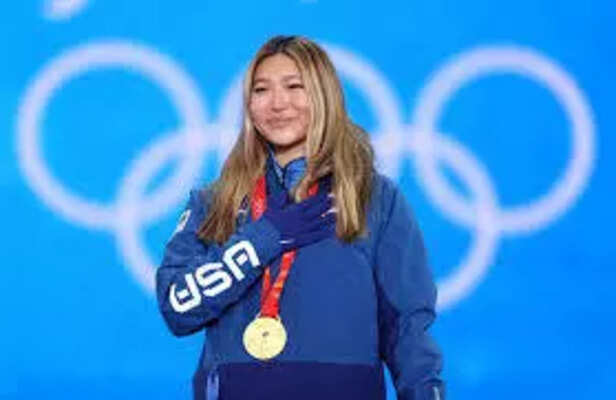
Image credit : X| Chloe Kim speaks out after Trump’s ‘real loser’ remark
The US president had labelled Kim’s teammate “a real loser” following comments that questioned aspects of the administration’s approach. The remark sparked swift reaction online, drawing attention not only to the tone of the criticism but also to the wider issue of whether athletes should be expected to remain silent on political matters. Kim’s response, delivered calmly and without confrontation, added a measured yet powerful voice to the debate.
Rather than responding directly to Trump, Kim chose to underline her pride in representing the United States while defending the right to speak freely. As the daughter of parents who emigrated from South Korea, she framed her message through lived experience, highlighting how opportunity and dissent can coexist within the same national story.
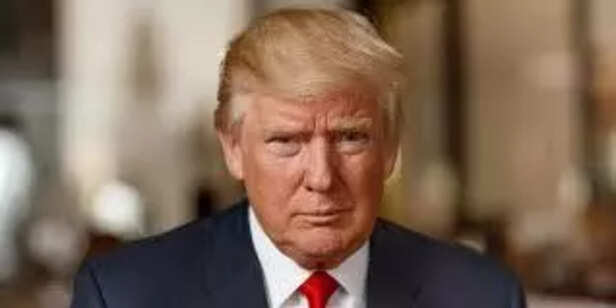
Image credit : X| Donald Trump in a previously taken photograph.
Why Kim’s message struck a national nerve
Kim’s statement struck a careful balance. She acknowledged the opportunities the United States had given her family, crediting the country for allowing her to pursue excellence at the highest level of sport. At the same time, she rejected the idea that gratitude should come at the cost of personal conviction.
Her words resonated precisely because they avoided extremes. Kim did not position herself as anti-American, nor did she suggest that criticism undermines patriotism. Instead, she presented civic engagement as a natural extension of belonging. For many observers, this reframing felt timely, particularly as athletes across disciplines increasingly use their platforms to engage with social and political issues.
The reaction online reflected this divide. Supporters praised Kim for her maturity and clarity, noting that her perspective carried weight because it was grounded in personal history rather than ideology. Critics, however, argued that athletes should focus solely on sport, a view that continues to surface whenever public figures step outside traditional boundaries.
When athletes shape the national conversation
Kim’s intervention highlights a broader shift in how athletes are perceived in public discourse. Once expected to remain apolitical, many now view their visibility as inseparable from responsibility. Olympic athletes, in particular, are often held up as symbols of national pride, making their opinions both influential and contentious.

Image credit : X| Chloe Kim backs teammate after Trump’s ‘real loser’ remark
What sets Kim apart is the way she framed her response. By emphasising gratitude alongside free expression, she challenged the notion that criticism equals disloyalty. Her remarks suggested that the strength of a democracy lies not in uniform agreement, but in the ability to accommodate diverse viewpoints.
As debates around patriotism and protest continue to play out across sporting arenas and social media platforms, Kim’s stance offers a reminder that identity is rarely singular. For athletes who represent their country on the world stage, pride and critique are not opposing forces. They are, instead, part of the same conversation about what it means to belong.
Olympian Chloe Kim defends teammate amid Trump controversy
By Simran Guleria

George Clooney's reaction to Park Bo Gum's visuals goes viral
By Karen Noronha

Jake Paul backtracks on Bad Bunny after Super Bowl drag sparks backlash
By Shivani Negi

ROSÉ and MrBeast spotted together at Super Bowl 2026
By Emmy Azad

Who is Robert Richens?
By Sneha Kumari

Travis Kelce says Taylor Swift changed how he listens
By Nancy Jaiswal

iJustine slams Jake Paul over his controversial ICE post
By Emmy Azad
