
Luxury cars get cheaper, EVs don’t: Inside the trade decision that leaves Elon Musk’s Tesla stranded in India
Nancy Jaiswal | Feb 09, 2026, 16:19 IST
India’s interim trade agreement with the US cuts tariffs on luxury cars and Harley-Davidson bikes but keeps electric vehicles out. The exclusion deals a setback to Elon Musk’s Tesla, which continues to face high duties amid slow sales and rising competition in India.

Image credit : Indiatimes | EVs left behind as India rewrites auto tariff
India’s newly announced interim trade pact with the United States brings tariff reductions for select automobile categories but offers no concessions for electric vehicles, leaving Tesla without the relief it has long sought in the Indian market.
According to officials cited by Reuters on February 7, India has agreed to reduce import duties on high-end American cars to 30 percent, down from the previously stated 110 percent. The agreement also eliminates tariffs on Harley-Davidson motorcycles. However, electric vehicles have been excluded from the deal, a decision that directly impacts Tesla as it looks to expand its presence in India.
The development comes at a time when the Elon Musk-led company has been lobbying New Delhi for lower import duties, citing high tariffs as a major barrier to scaling operations in the country.
The trade arrangement follows an announcement made by US President Donald Trump on February 2 after months of negotiations and a phone conversation with Indian Prime Minister Narendra Modi. As part of the interim agreement, the United States sharply reduced tariffs on Indian exports from 50 percent to 18 percent.
![Tesla’s India hopes dim as US-India trade agreement excludes electric vehicles]() In return, India agreed to halt purchases of Russian crude oil. The deal focuses on easing trade barriers in specific sectors, including automobiles, but stops short of extending benefits to electric vehicles.
In return, India agreed to halt purchases of Russian crude oil. The deal focuses on easing trade barriers in specific sectors, including automobiles, but stops short of extending benefits to electric vehicles.
Officials told Reuters that tariffs on traditional internal-combustion engine cars with engine capacities exceeding 3,000 cc would be gradually reduced to 30 percent over a ten-year period.
Despite the broader tariff cuts, electric vehicles were not included in the agreement. An official cited in the report noted that this exclusion could effectively close off a lower-duty entry route for Tesla into India.
![No EV entry door for Tesla as India’s US trade pact cuts car duties]() The move also sidesteps a key demand repeatedly raised by Tesla Chief Executive Officer Elon Musk, who has publicly criticised India’s high import duties. The absence of EV concessions stands in contrast to India’s trade approach with European carmakers.
The move also sidesteps a key demand repeatedly raised by Tesla Chief Executive Officer Elon Musk, who has publicly criticised India’s high import duties. The absence of EV concessions stands in contrast to India’s trade approach with European carmakers.
Under a separate agreement with the European Union, India has announced tariff reductions to as low as 10 percent across a wide range of vehicles, including phased concessions on some electric models.
A Bloomberg report published in January 2026 highlighted Tesla’s challenges in India. The company reportedly struggled to sell even one-third of the vehicles it imported into the country last year, as several early bookers withdrew their orders.
To stimulate demand, Tesla has been offering discounts of up to ₹200,000 (approximately $2,200) on select SUV variants. Tesla entered the Indian market in July 2025 but has faced a muted response amid slowing global demand.
In 2025, Tesla’s worldwide sales declined for a second consecutive year, while China’s BYD overtook the company as the leading EV manufacturer.
The report also noted that Tesla’s market share has been affected by waning subsidies and increasing competition in key regions, including the United States, Europe, and China.
![Tesla's Chief Executive Officer Elon Musk]() In India, buyers remain cautious due to Tesla’s higher pricing and limited brand visibility. Some prospective customers reportedly backed out after test drives, opting instead for alternatives such as BMW’s iX1 or BYD’s Sealion, both priced below Tesla’s Model Y.
In India, buyers remain cautious due to Tesla’s higher pricing and limited brand visibility. Some prospective customers reportedly backed out after test drives, opting instead for alternatives such as BMW’s iX1 or BYD’s Sealion, both priced below Tesla’s Model Y.
Tesla registered only 227 vehicles in India in 2025, and several buyers who initially paid deposits have yet to complete their purchases.
Despite tariff relief elsewhere, Tesla remains excluded from India’s EV trade benefits, compounding its challenges in a competitive and price-sensitive market.
According to officials cited by Reuters on February 7, India has agreed to reduce import duties on high-end American cars to 30 percent, down from the previously stated 110 percent. The agreement also eliminates tariffs on Harley-Davidson motorcycles. However, electric vehicles have been excluded from the deal, a decision that directly impacts Tesla as it looks to expand its presence in India.
The development comes at a time when the Elon Musk-led company has been lobbying New Delhi for lower import duties, citing high tariffs as a major barrier to scaling operations in the country.
What the US-India interim trade pact includes
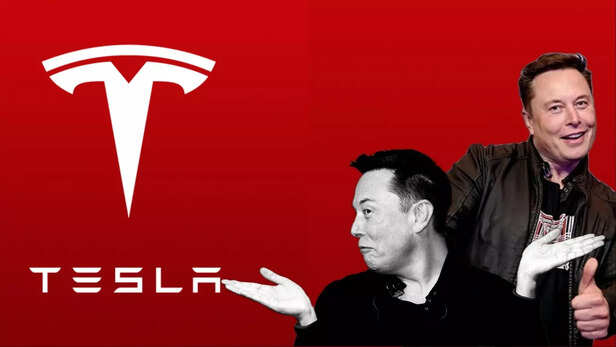
Image credit : Indiatimes | Tesla’s India hopes dim as US-India trade agreement excludes electric vehicles
Officials told Reuters that tariffs on traditional internal-combustion engine cars with engine capacities exceeding 3,000 cc would be gradually reduced to 30 percent over a ten-year period.
Electric vehicles left out of tariff relief
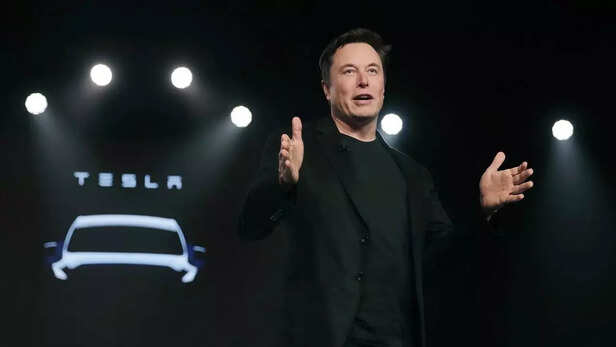
Image credit : X/MuskElon3312 | No EV entry door for Tesla as India’s US trade pact cuts car duties
Under a separate agreement with the European Union, India has announced tariff reductions to as low as 10 percent across a wide range of vehicles, including phased concessions on some electric models.
Tesla’s struggle in the Indian market
To stimulate demand, Tesla has been offering discounts of up to ₹200,000 (approximately $2,200) on select SUV variants. Tesla entered the Indian market in July 2025 but has faced a muted response amid slowing global demand.
In 2025, Tesla’s worldwide sales declined for a second consecutive year, while China’s BYD overtook the company as the leading EV manufacturer.
Competition and buyer hesitation
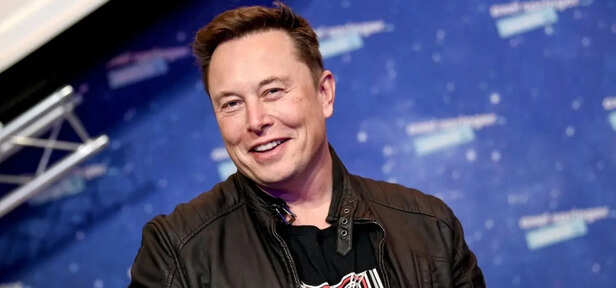
Image credit : X/MuskElon3312 | Tesla's Chief Executive Officer Elon Musk
Tesla registered only 227 vehicles in India in 2025, and several buyers who initially paid deposits have yet to complete their purchases.
Despite tariff relief elsewhere, Tesla remains excluded from India’s EV trade benefits, compounding its challenges in a competitive and price-sensitive market.
EVs left behind as India rewrites auto tariff
By Nancy Jaiswal

Is ‘if they wanted to, they would’ always true?
By Nancy Jaiswal

Ariana Grande and Taylor Swift's DM exchange goes viral
By Emmy Azad

This Amazon AI feature is basically the Avengers for dogs
By Sneha Kumari

Real Housewives alum slam Bad Bunny’s halftime show
By Emmy Azad

Stop sending basic V-Day texts. Let AI do it better
By Sneha Kumari

Journalist cries as Bad Bunny transcends language at Super Bowl
By Simran Guleria
